
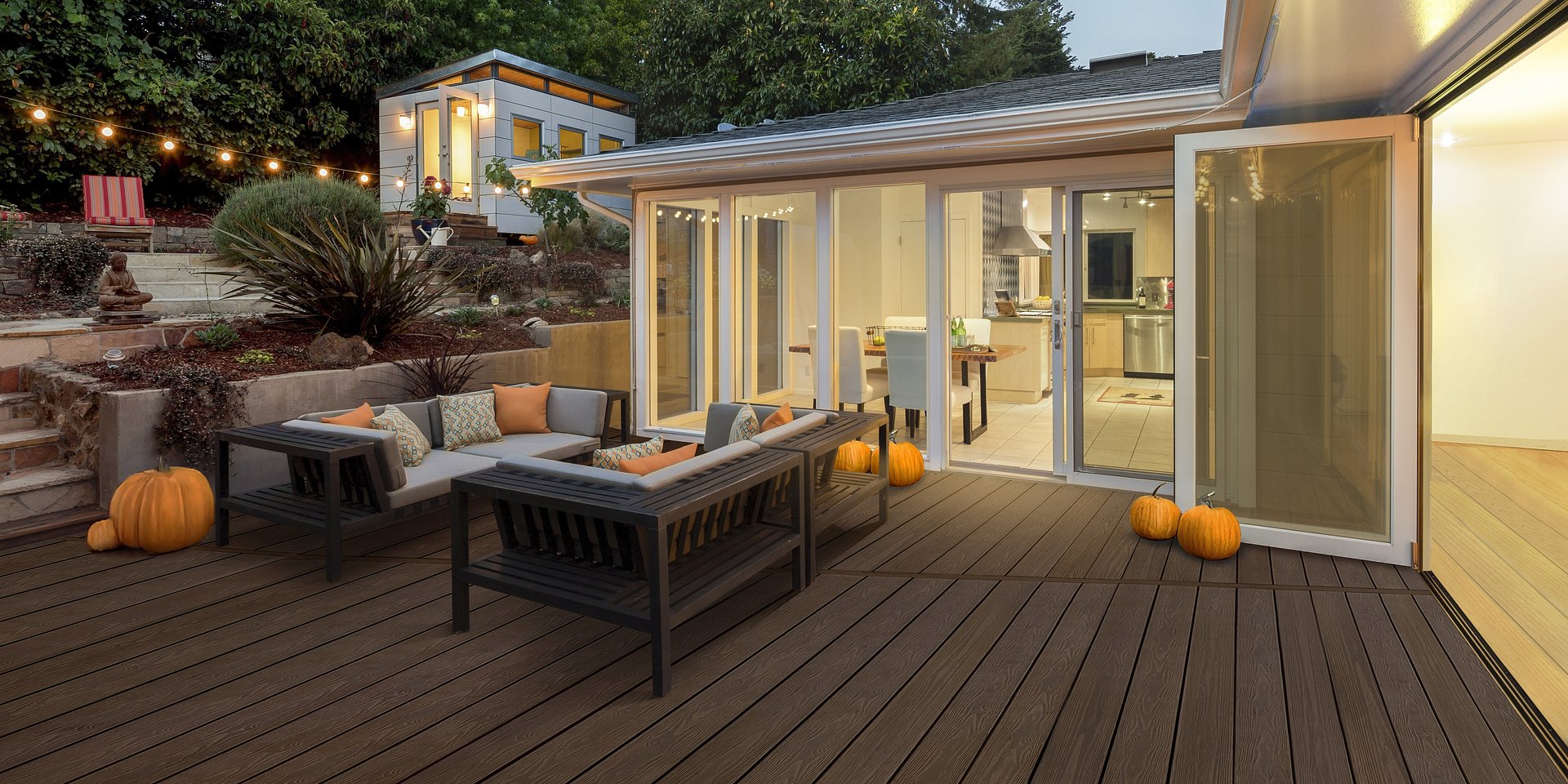
Plano, Texas – September 25, 2025 – As the fall season settles in and the crisp air signals winter’s approach, homeowners across the U.S. are preparing their outdoor spaces for colder weather. While many associate deck building or renovations with summer, fall is actually one of the best times to plan or refresh outdoor projects, before rain, snow, and ice arrive. Choosing materials that can stand up to freezing temperatures, snow loads, and the constant cycle of thawing and refreezing is key to ensuring outdoor spaces perform year-round.
Traditional wood decking, while initially spectacular, often struggles in winter conditions. Moisture and freezing temperatures can cause boards to expand and contract, leading to warping or splitting. The use of ice-melt products and snow shovels adds to the wear, while ongoing sealing or staining is needed to fend off mold and rot. Concrete and ceramic surfaces are also vulnerable, with cracks forming as trapped water expands during freeze-thaw cycles. And these cycles are becoming more frequent: across the U.S., the number of “unfrozen days” has increased by about four days per decade, creating more opportunities for water to infiltrate, freeze, and damage materials.
Snow loads present another challenge. While cities like Dallas average just 2.6 inches of snow a year, northern regions such as Syracuse, New York, see upwards of 115 inches annually. In areas with 60 or more snow days a year, the demands on decking strength, slip resistance, and maintenance are considerable.
'This is one reason many homeowners and contractors are turning to Eva-Last composite decking,' says Marc Minne, Eva-Last CEO. Options such as bamboo-based composites resist water penetration, minimize expansion and contraction, and provide slip-resistant surfaces, helping make decks safer during icy conditions. Snow can usually be cleared with a plastic or rubber-edged shovel, without the risk of splintering or damaging the boards.
Manufacturers like Eva-Last with its Apex Plus, Infinity, and Pioneer ranges, have developed products designed specifically to endure these extremes. Reinforcements like glass fiber improve dimensional stability during freeze-thaw cycles, while textured surfaces enhance grip in snow and ice. While each line brings slightly different benefits, all are aimed at reducing the typical pitfalls of outdoor decking not only in winter, but all year round.
For homeowners, the takeaway is clear: planning ahead in the fall and investing in durable, low-maintenance decking materials can mean safer, more resilient spaces and far less work come springtime. With the right choice, your deck won’t just survive the winter, it will be ready to enjoy in every season ahead.
For more information on Eva-Last’s Apex Plus, Infinity, and Pioneer bamboo composite decking, visit www.eva-last.com/us.
About Eva-Last®
Eva-Last is a globally recognized and trusted brand that manufactures and distributes specialized bamboo composite building products. Together with a wide range of advanced decking, cladding, fencing, architectural beams, fasteners and flooring products, Eva-Last also offers specialized support systems and expert advice, ensuring each and every build is designed to last. Eva-Last composite products and complimentary systems can be found in over 30 countries globally and have been an imperative part of some of the world’s largest building projects. As a global leader in composite building technology, Eva-Last ensures product quality and customer satisfaction with class-leading warranties. For the latest news, please follow Eva-Last on Facebook (EvaLastAmericas), Instagram (EvaLast_Americas), X (EvaLastGlobal), LinkedIn (Eva-Last Global), Pinterest (EvaLastGlobal), and Flickr (Eva-Last), or view the brand's YouTube channel (EvaLastGlobal) for product information and installation guidelines.